
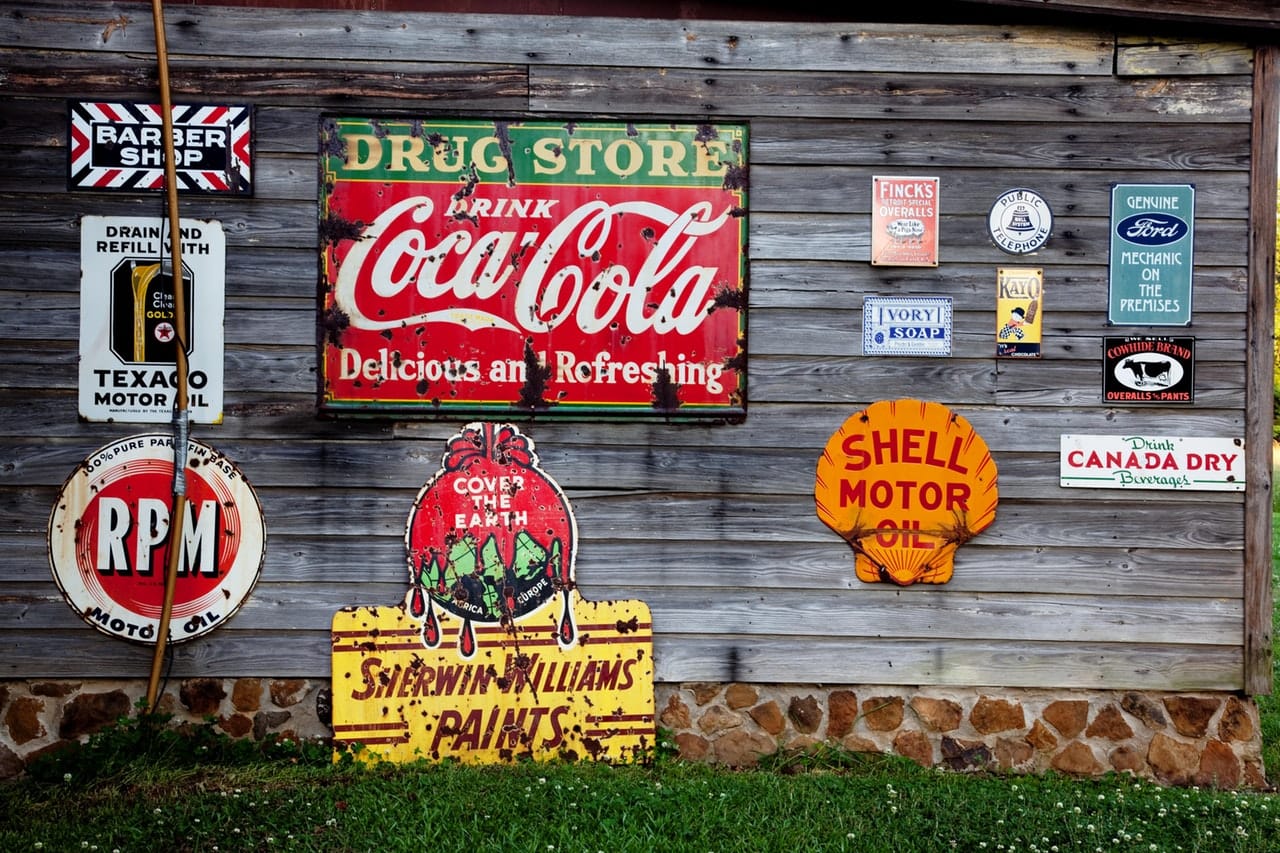
Old shop and roadside advertising signs are among the most eye-catching collectables around. A faded enamel sign for motor oil, paint or a soft drink tells a story about how people shopped, travelled and lived, and it brings instant character to a kitchen, workshop or garage wall. Before you start buying, it helps to know what you are looking at.
Enamel, Tin and Other Materials
The classic collectable is the porcelain enamel sign. It was made by fusing layers of glass powder onto a steel sheet in a kiln, one colour at a time. These signs are heavy, glossy and very hard wearing, and where they are chipped you can often see the dark steel underneath.
Tin or lithographed signs were printed directly onto thinner metal. They are lighter and were cheaper to produce, but the printed surface scratches and rusts more easily. You will also come across signs made of card, painted wood and glass, each of which ages in its own way.
Spotting Reproductions
Reproduction signs are very common. Many are sold honestly as decoration, but some find their way into markets described as original. Look at the weight and thickness first, as a modern copy often feels too light. On genuine enamel you can usually feel slight steps between the colour layers with a fingertip. Check the mounting holes, which were often fitted with metal grommets on older signs, and look for wear around them.
Wear should make sense. Rust tends to start at the edges and holes, chips appear where a sign was knocked, and one side may be more faded if it faced the sun. Distressing that looks even all over is a warning sign. If you simply love the look, a reproduction can be a fine choice, much like the pieces in our post on antique imitation crafts, as long as it is priced as one.
Condition and Value
Rarity, the popularity of the brand, strength of colour, size and condition all play a part. Small chips around the mounting holes are normal on an old sign and many collectors accept them. Large losses across the main image or lettering are a bigger concern. Repainting and touch-ups should always be disclosed by the seller, so ask directly if anything looks too fresh.
Displaying and Caring for Your Signs
Enamel signs are heavy, so hang them with proper fixings into a solid wall rather than relying on a single picture hook. Indoors is best, because damp sheds and garages encourage rust. Clean them with mild soapy water and a soft cloth, dry them thoroughly and avoid abrasive cleaners, especially on tin signs where the printed surface is delicate.
Conclusion
Vintage signs reward patience and a careful eye. Fairs, flea markets and auctions are all good hunting grounds, and our guide to finding bargains at antique auctions will help you plan your next visit. Take your time, handle as many signs as you can and you will soon learn to tell an honest old piece from a modern copy.